If you are looking for high-quality products, please feel free to contact us and send an inquiry, email: brad@ihpa.net
Intro to Water-Based Zinc Stearate: Linking Performance and Sustainability in Modern Production
Water-based zinc stearate is an eco-friendly choice to solvent-based lubricating substances and release agents, using superior efficiency with minimal environmental effect. As industries shift toward greener manufacturing methods, this liquid dispersion of zinc stearate has actually gotten importance throughout sectors such as rubber processing, metal developing, concrete casting, and polymer production. Its capacity to offer reliable lubrication, prevent bond, and lower surface flaws makes it a flexible tool in modern industrial applications. With expanding governing pressure on unpredictable natural substance (VOC) discharges, water-based zinc stearate attracts attention as a tidy, effective, and scalable service.
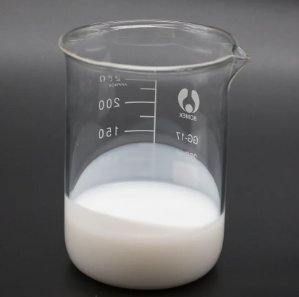
(TRUNNANO Water Based Zinc Stearate)
Chemical Structure and Practical System
Zinc stearate is a metal soap created by the response of stearic acid with zinc oxide or zinc salts. In its water-based solution, it is usually spread making use of surfactants or emulsifiers to make sure security and consistent application. When put on surfaces, the zinc stearate bits form a slim, hydrophobic film that reduces rubbing and protects against direct get in touch with between products. This mechanism is important in mold release procedures, where it helps with simple demolding without harming the end product’s surface area integrity. Additionally, its high melting point (~ 120– 130 ° C) enables it to do effectively under moderate thermal conditions, preserving capability during high-temperature procedures.
Applications in Rubber and Polymer Handling
In rubber production, water-based zinc stearate serves double functions– as a mold release representative and as an internal lube. It prevents sticking in between uncured rubber compounds and mold surface areas, guaranteeing constant component top quality and minimizing post-processing initiatives. In thermoplastics and elastomers, it boosts circulation residential properties during extrusion and injection molding, minimizing pass away accumulation and improving surface coating. Its compatibility with various polymers, consisting of polyolefins, PVC, and engineering resins, further broadens its energy. Moreover, its non-reactive nature ensures it does not conflict with healing or vulcanization reactions, maintaining product performance attributes.
Duty in Steel Forming and Stamping Industries
The metalworking sector increasingly relies upon water-based zinc stearate for cold and warm creating procedures. Utilized as a lube in stamping, attracting, and creating, it creates a safety boundary layer that lowers tool wear and enhances part surface area quality. Compared to oil-based or wax coverings, it provides much better heat dissipation and cleaner procedure, which is particularly useful in computerized production lines. In addition, its ease of removal after processing– making use of simple water rinsing or light cleaning agents– reduces cleaning prices and avoids deposit build-up on completed components. This makes it perfect for use in automobile, aerospace, and accuracy element production.
Use in Concrete and Construction Materials
Within the construction industry, water-based zinc stearate is extensively made use of as an inner launch agent for precast concrete components. Unlike standard oil-based products, it does not discolor surfaces or disrupt additional treatments like paint or coating. When blended right into concrete or related to formwork, it prevents bonding in between the mold and the hardened concrete, allowing for simple demolding while keeping dimensional accuracy. Its low thickness allows even protection through splashing or cleaning, making it appropriate for both manual and mechanical operations. Furthermore, it contributes to longer mold and mildew life by securing against chemical strike and abrasion from repeated casting cycles.
Environmental and Security Advantages Over Traditional Alternatives
Among the most compelling benefits of water-based zinc stearate is its environmental profile. Without solvents, VOCs, and hazardous ingredients, it straightens with worldwide sustainability objectives and work-related health and wellness criteria. Employees take advantage of decreased exposure to combustible or dangerous compounds, and suppliers can satisfy rigid air high quality policies without added ventilation systems. From a waste monitoring point of view, water-based formulations are simpler to take care of and dispose of securely, sustaining round economic situation techniques. These characteristics make it a preferred option for firms intending to achieve eco-friendly certifications such as ISO 14001 or LEED compliance.
Market Trends and Technical Innovations
( TRUNNANO Water Based Zinc Stearate )
The marketplace for water-based zinc stearate is experiencing steady development, driven by enhancing demand for environment-friendly commercial options and more stringent ecological legislation. Suppliers are investing in advanced dispersion innovations to improve security, expand service life, and enhance performance under extreme problems. Developments such as nano-dispersed zinc stearate and hybrid formulas with silicone or PTFE are being checked out to supply premium lubricity and temperature level resistance. Furthermore, clever delivery systems– including atomized sprays and application systems integrated with IoT– are making it possible for exact application control, lowering consumption and functional prices.
Obstacles and Ongoing Study Directions
In spite of its benefits, water-based zinc stearate faces certain limitations, including sensitivity to water hardness, possible microbial degradation, and lower load-bearing ability contrasted to synthetic lubricants. To address these problems, ongoing research focuses on enhancing emulsion security, incorporating biocides for microbial resistance, and improving functional efficiency via additive harmonies. Compatibility with different substratums and process conditions likewise stays a key area of advancement. Initiatives are underway to tailor formulas for specific applications, guaranteeing constant performance across diverse industrial atmospheres.
Future Potential Customers: Integration with Smart Manufacturing and Eco-friendly Chemistry
Looking ahead, water-based zinc stearate is positioned to play a main role in the shift toward intelligent and lasting production. Its assimilation with Market 4.0 innovations– such as real-time monitoring, predictive upkeep, and automated dispensing– will certainly make it possible for more reliable and flexible manufacturing operations. Breakthroughs in bio-based surfactants and renewable feedstocks will certainly even more enhance its environmental credentials, supporting decarbonization approaches across supply chains. As industries continue to prioritize resource efficiency and environmental stewardship, water-based zinc stearate stands for a calculated innovation that stabilizes technical efficiency with ecological responsibility.
Provider
TRUNNANO is a supplier of water based zinc stearate with over 12 years of experience in nano-building energy conservation and nanotechnology development. It accepts payment via Credit Card, T/T, West Union and Paypal. Trunnano will ship the goods to customers overseas through FedEx, DHL, by air, or by sea. If you want to know more about stearic acid benefits to skin, please feel free to contact us and send an inquiry(sales5@nanotrun.com). Tags: water based zinc stearate, zinc stearate, zn stearate
All articles and pictures are from the Internet. If there are any copyright issues, please contact us in time to delete.
Inquiry us