If you are looking for high-quality products, please feel free to contact us and send an inquiry, email: brad@ihpa.net
Introduction to Boron Nitride Ceramics: An One-of-a-kind Class of High-Tech Materials
Boron nitride ceramic products have become a critical class of sophisticated porcelains, identified by their one-of-a-kind combination of thermal conductivity, electric insulation, chemical inertness, and mechanical security at severe temperatures. Unlike conventional oxide or carbide-based porcelains, boron nitride (BN) exists in numerous crystalline kinds– most especially hexagonal (h-BN), cubic (c-BN), and wurtzite (w-BN)– each supplying unique residential properties matched for specialized applications. From high-temperature crucibles to semiconductor components and quantum gadgets, BN ceramics are redefining efficiency limits throughout industries varying from aerospace to microelectronics.
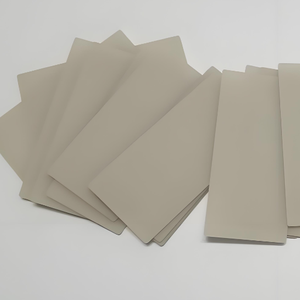
(Boron Nitride Ceramic)
Architectural Features and Polymorphic Variants of Boron Nitride Ceramics
The versatility of boron nitride stems from its capability to embrace various crystal frameworks, each with customized physical and chemical qualities. Hexagonal boron nitride (h-BN), frequently referred to as “white graphite,” includes a split framework that imparts superb lubricity, reduced rubbing, and high thermal conductivity while keeping electric insulation. Cubic boron nitride (c-BN), 2nd just to ruby in hardness, is extensively used in cutting devices and abrasive applications. Wurtzite BN (w-BN) exhibits piezoelectric properties, making it ideal for high-pressure sensors and optoelectronic gadgets. These polymorphs make it possible for the style of very specialized ceramic items adapted to demanding commercial atmospheres.
Production Techniques and Material Difficulties
Making high-grade boron nitride ceramic items includes precise powder synthesis, shaping, and sintering methods. h-BN is normally fabricated by means of warm pushing or stimulate plasma sintering, while c-BN requires high-pressure, high-temperature (HPHT) approaches to stabilize its cubic stage. Achieving dense, defect-free BN ceramics remains an obstacle as a result of the product’s naturally low self-diffusivity and propensity toward porosity. Additives such as yttria or alumina are often introduced to improve densification without compromising thermal or electric performance. Recurring study focuses on additive production, nanostructuring, and hybrid compounds to increase the variety of viable geometries and capabilities.
Applications in Electronics, Semiconductors, and Thermal Administration Solution
Among the most considerable duties of boron nitride ceramic items depends on the electronics and semiconductor sectors, where thermal monitoring and electrical isolation are paramount. h-BN substratums are increasingly utilized in power modules, RF components, and LED packages as a result of their exceptional thermal conductivity and dielectric residential properties. In semiconductor crystal growth processes– such as Czochralski drawing or directional solidification– BN crucibles make sure contamination-free melt handling. Furthermore, thin-film BN layers act as diffusion obstacles and passivation coatings in integrated circuits, enhancing device reliability under severe operating problems.
Use in Aerospace, Protection, and Nuclear Technologies
Boron nitride ceramic items likewise play an essential function in aerospace, protection, and atomic energy systems. Their neutron-absorbing capabilities make them excellent for control poles and protecting products in nuclear reactors. In hypersonic trip and space exploration, BN compounds give lightweight, thermally steady components capable of standing up to re-entry temperatures exceeding 2000 ° C. Military applications consist of radar-transparent radomes, projectile nose cones, and armor-piercing penetrators made from c-BN-reinforced ceramics. As nationwide protection and space sectors evolve, require for BN-based products is anticipated to expand considerably.
Improvements in Mechanical and Industrial Processing Equipment
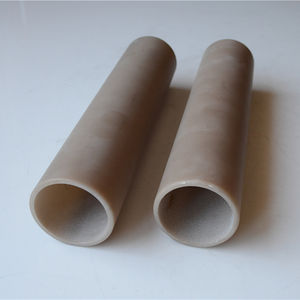
( Boron Nitride Ceramic)
Cubic boron nitride (c-BN) has revolutionized machining and metalworking sectors as a result of its remarkable hardness and thermal security. c-BN cutting devices surpass typical tungsten carbide and even some ruby tools when machining ferrous alloys, as they do not chemically react with iron at high temperatures. This makes them important in automotive and aerospace production, where precision and tool longevity are essential. Innovations in finish modern technologies and composite device layouts remain to push the restrictions of c-BN’s efficiency, allowing much faster machining rates and extended device life in high-volume production setups.
Environmental and Economic Considerations
In spite of their high-performance advantages, boron nitride ceramic items encounter economic and ecological challenges. Manufacturing prices continue to be elevated due to intricate synthesis paths and limited economic climates of scale compared to even more established technical ceramics like silicon nitride or light weight aluminum oxide. Recycling and end-of-life disposal techniques are still in very early growth, though rate of interest in circular manufacturing models is expanding. Scientists are exploring alternate basic material resources, bio-derived binders, and reusable mold and mildew innovations to reduce the environmental impact of BN ceramic production while boosting expense competition.
Market Patterns and Global Market Development
The worldwide market for boron nitride ceramic items is experiencing constant development, driven by increasing demand from the semiconductor, protection, and tidy power fields. Asia-Pacific leads in usage, especially in China and Japan, where financial investments in next-generation electronics and photovoltaics are accelerating. North America and Europe adhere to closely, sustained by government-backed R&D programs in quantum computing, fusion power, and hypersonic automobile development. Principal are expanding production capacity, developing critical partnerships, and buying electronic process optimization to fulfill rising global need for high-performance BN ceramic options.
Future Prospects: Integration with Smart Manufacturing and Advanced Materials Science
Looking ahead, boron nitride ceramic items are poised to play a central function in the development of smart manufacturing, AI-driven products design, and next-generation electronic systems. Advancements in additive manufacturing are enabling the construction of facility BN geometries formerly unattainable with traditional methods. Assimilation with IoT-enabled sensing units and anticipating upkeep systems will enhance real-time tracking of BN elements in high-stress atmospheres. Moreover, emerging study into 2D BN nanosheets, heterostructures, and quantum-confined systems assures advancements in optoelectronics, spintronics, and ultra-fast computer, further sealing BN porcelains as fundamental materials for future technological advancement.
Distributor
Advanced Ceramics founded on October 17, 2012, is a high-tech enterprise committed to the research and development, production, processing, sales and technical services of ceramic relative materials and products. Our products includes but not limited to Boron Carbide Ceramic Products, Boron Nitride Ceramic Products, Silicon Carbide Ceramic Products, Silicon Nitride Ceramic Products, Zirconium Dioxide Ceramic Products, etc. If you are interested, please feel free to contact us.(nanotrun@yahoo.com) Tags: boron nitride ceramic, ceramic boron nitride, machining boron nitride
All articles and pictures are from the Internet. If there are any copyright issues, please contact us in time to delete.
Inquiry us