If you are looking for high-quality products, please feel free to contact us and send an inquiry, email: brad@ihpa.net
1. The Product Foundation and Crystallographic Identity of Alumina Ceramics
1.1 Atomic Architecture and Phase Stability
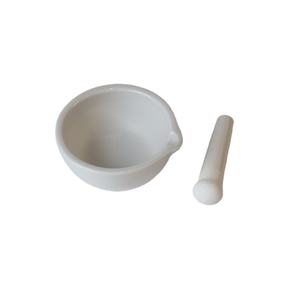
(Alumina Ceramics)
Alumina porcelains, mainly made up of light weight aluminum oxide (Al two O THREE), stand for among the most commonly utilized courses of innovative ceramics because of their phenomenal balance of mechanical strength, thermal durability, and chemical inertness.
At the atomic level, the performance of alumina is rooted in its crystalline structure, with the thermodynamically stable alpha phase (α-Al two O SIX) being the leading type used in engineering applications.
This phase adopts a rhombohedral crystal system within the hexagonal close-packed (HCP) lattice, where oxygen anions form a thick plan and aluminum cations occupy two-thirds of the octahedral interstitial websites.
The resulting structure is extremely stable, adding to alumina’s high melting factor of roughly 2072 ° C and its resistance to disintegration under extreme thermal and chemical conditions.
While transitional alumina stages such as gamma (γ), delta (δ), and theta (θ) exist at reduced temperature levels and exhibit higher surface areas, they are metastable and irreversibly transform right into the alpha phase upon home heating above 1100 ° C, making α-Al ₂ O ₃ the exclusive stage for high-performance architectural and functional elements.
1.2 Compositional Grading and Microstructural Engineering
The buildings of alumina porcelains are not dealt with however can be customized with regulated variants in pureness, grain dimension, and the addition of sintering help.
High-purity alumina (≥ 99.5% Al ₂ O TWO) is utilized in applications demanding optimum mechanical strength, electric insulation, and resistance to ion diffusion, such as in semiconductor handling and high-voltage insulators.
Lower-purity grades (ranging from 85% to 99% Al Two O FOUR) typically integrate second phases like mullite (3Al two O THREE · 2SiO TWO) or glassy silicates, which improve sinterability and thermal shock resistance at the cost of hardness and dielectric performance.
A critical consider performance optimization is grain size control; fine-grained microstructures, attained through the addition of magnesium oxide (MgO) as a grain growth prevention, substantially enhance crack durability and flexural toughness by limiting fracture breeding.
Porosity, even at low levels, has a harmful impact on mechanical integrity, and fully dense alumina ceramics are typically produced through pressure-assisted sintering methods such as warm pushing or hot isostatic pressing (HIP).
The interplay between make-up, microstructure, and handling specifies the functional envelope within which alumina porcelains operate, enabling their use throughout a large spectrum of industrial and technological domain names.
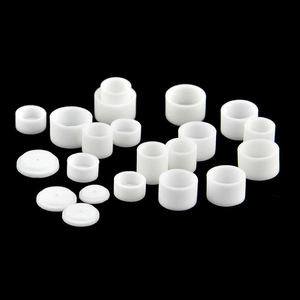
( Alumina Ceramics)
2. Mechanical and Thermal Efficiency in Demanding Environments
2.1 Stamina, Solidity, and Wear Resistance
Alumina porcelains show a distinct combination of high solidity and moderate crack toughness, making them excellent for applications entailing abrasive wear, erosion, and influence.
With a Vickers solidity normally varying from 15 to 20 GPa, alumina ranks amongst the hardest design materials, surpassed just by diamond, cubic boron nitride, and particular carbides.
This severe hardness equates right into remarkable resistance to scratching, grinding, and particle impingement, which is exploited in elements such as sandblasting nozzles, cutting tools, pump seals, and wear-resistant liners.
Flexural stamina worths for thick alumina variety from 300 to 500 MPa, depending on purity and microstructure, while compressive toughness can exceed 2 Grade point average, enabling alumina parts to stand up to high mechanical tons without contortion.
Despite its brittleness– a common quality among ceramics– alumina’s efficiency can be enhanced via geometric design, stress-relief attributes, and composite support approaches, such as the incorporation of zirconia particles to generate transformation toughening.
2.2 Thermal Behavior and Dimensional Stability
The thermal properties of alumina ceramics are central to their usage in high-temperature and thermally cycled atmospheres.
With a thermal conductivity of 20– 30 W/m · K– higher than most polymers and comparable to some steels– alumina effectively dissipates warmth, making it suitable for heat sinks, shielding substratums, and heater components.
Its low coefficient of thermal development (~ 8 × 10 ⁻⁶/ K) ensures marginal dimensional change throughout heating and cooling, minimizing the danger of thermal shock cracking.
This stability is particularly useful in applications such as thermocouple defense tubes, ignition system insulators, and semiconductor wafer handling systems, where accurate dimensional control is crucial.
Alumina keeps its mechanical integrity approximately temperature levels of 1600– 1700 ° C in air, past which creep and grain border gliding may start, depending upon purity and microstructure.
In vacuum or inert ambiences, its performance prolongs even better, making it a preferred material for space-based instrumentation and high-energy physics experiments.
3. Electric and Dielectric Features for Advanced Technologies
3.1 Insulation and High-Voltage Applications
Among one of the most substantial functional attributes of alumina porcelains is their exceptional electric insulation capacity.
With a volume resistivity going beyond 10 ¹⁴ Ω · centimeters at space temperature level and a dielectric toughness of 10– 15 kV/mm, alumina works as a dependable insulator in high-voltage systems, consisting of power transmission devices, switchgear, and digital packaging.
Its dielectric constant (εᵣ ≈ 9– 10 at 1 MHz) is fairly steady across a vast regularity array, making it appropriate for use in capacitors, RF parts, and microwave substrates.
Low dielectric loss (tan δ < 0.0005) guarantees very little power dissipation in rotating present (A/C) applications, enhancing system efficiency and lowering warmth generation.
In printed circuit boards (PCBs) and hybrid microelectronics, alumina substratums offer mechanical support and electrical seclusion for conductive traces, allowing high-density circuit assimilation in rough settings.
3.2 Performance in Extreme and Delicate Atmospheres
Alumina porcelains are distinctively fit for use in vacuum cleaner, cryogenic, and radiation-intensive atmospheres because of their reduced outgassing prices and resistance to ionizing radiation.
In fragment accelerators and blend activators, alumina insulators are utilized to separate high-voltage electrodes and analysis sensing units without presenting contaminants or breaking down under long term radiation direct exposure.
Their non-magnetic nature likewise makes them suitable for applications involving strong magnetic fields, such as magnetic vibration imaging (MRI) systems and superconducting magnets.
Furthermore, alumina’s biocompatibility and chemical inertness have caused its adoption in medical gadgets, consisting of dental implants and orthopedic parts, where long-term security and non-reactivity are critical.
4. Industrial, Technological, and Arising Applications
4.1 Role in Industrial Equipment and Chemical Processing
Alumina porcelains are thoroughly used in commercial equipment where resistance to put on, rust, and high temperatures is crucial.
Parts such as pump seals, valve seats, nozzles, and grinding media are typically made from alumina because of its capacity to withstand abrasive slurries, hostile chemicals, and raised temperatures.
In chemical processing plants, alumina cellular linings secure reactors and pipes from acid and antacid attack, prolonging devices life and reducing maintenance prices.
Its inertness additionally makes it appropriate for usage in semiconductor manufacture, where contamination control is vital; alumina chambers and wafer boats are exposed to plasma etching and high-purity gas environments without seeping contaminations.
4.2 Combination into Advanced Manufacturing and Future Technologies
Beyond traditional applications, alumina ceramics are playing a significantly vital role in arising technologies.
In additive production, alumina powders are used in binder jetting and stereolithography (SLA) refines to produce complex, high-temperature-resistant components for aerospace and power systems.
Nanostructured alumina movies are being discovered for catalytic assistances, sensors, and anti-reflective layers due to their high surface area and tunable surface area chemistry.
In addition, alumina-based composites, such as Al ₂ O SIX-ZrO ₂ or Al Two O FIVE-SiC, are being established to conquer the integral brittleness of monolithic alumina, offering improved durability and thermal shock resistance for next-generation architectural products.
As markets continue to press the borders of performance and reliability, alumina ceramics remain at the leading edge of product technology, linking the gap between structural toughness and practical flexibility.
In recap, alumina porcelains are not just a course of refractory materials but a cornerstone of modern design, making it possible for technical progression throughout power, electronics, health care, and industrial automation.
Their special mix of residential properties– rooted in atomic structure and improved via innovative handling– ensures their continued significance in both developed and arising applications.
As product scientific research develops, alumina will certainly stay an essential enabler of high-performance systems operating beside physical and ecological extremes.
5. Distributor
Alumina Technology Co., Ltd focus on the research and development, production and sales of aluminum oxide powder, aluminum oxide products, aluminum oxide crucible, etc., serving the electronics, ceramics, chemical and other industries. Since its establishment in 2005, the company has been committed to providing customers with the best products and services. If you are looking for high quality alumina castable, please feel free to contact us. (nanotrun@yahoo.com) Tags: Alumina Ceramics, alumina, aluminum oxide
All articles and pictures are from the Internet. If there are any copyright issues, please contact us in time to delete.
Inquiry us